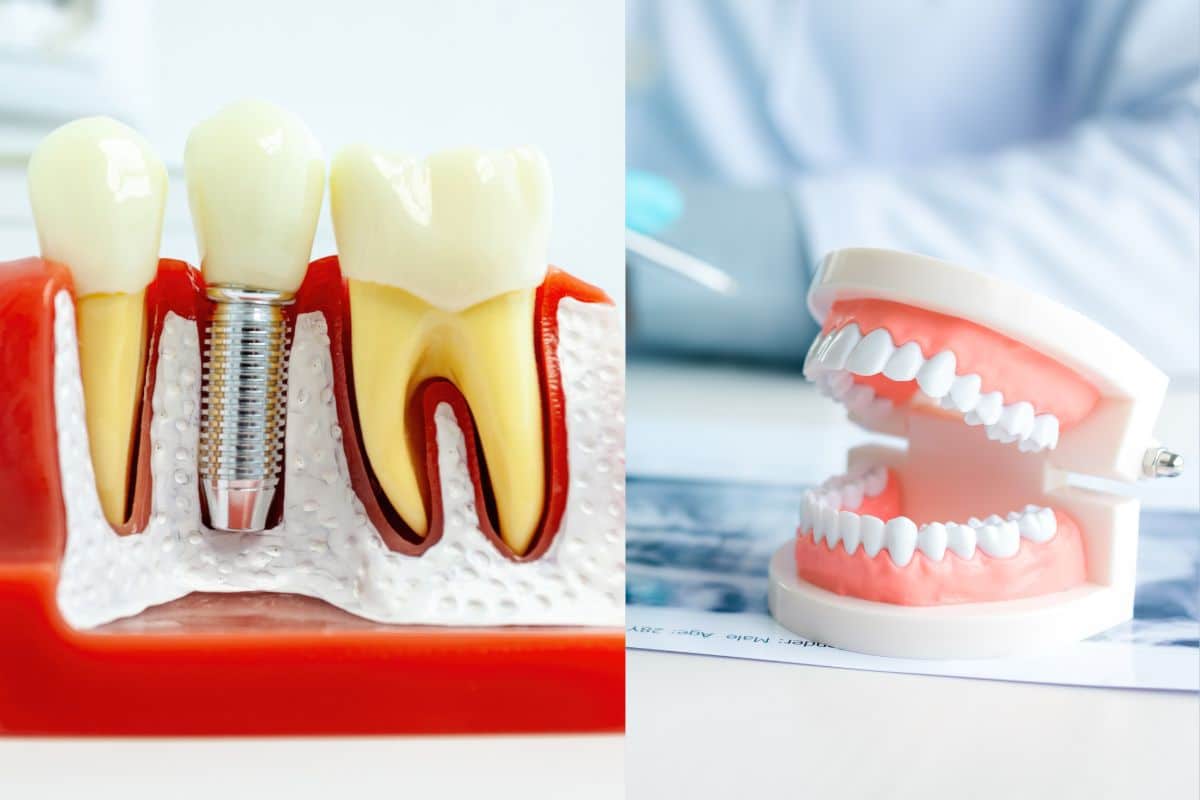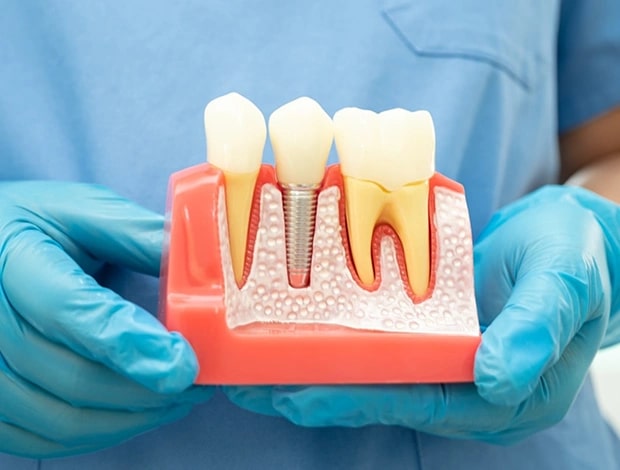


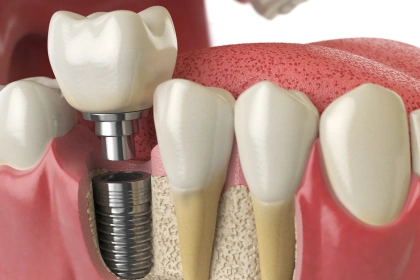
Dental implants are a life-changing solution for missing teeth, restoring both function and confidence. But if you’ve recently had a dental implant placed, noticing some bleeding can be alarming. Should you panic, or is this a normal part of the healing process? Understanding what to expect can make your recovery smoother and help you feel confident about your dental care.
At Nalbandian Dentistry in Burbank, we often see patients worried about post-implant bleeding. Let’s break down what’s normal, what isn’t, and how you can care for your new smile.
Why Bleeding Can Happen After a Dental Implant
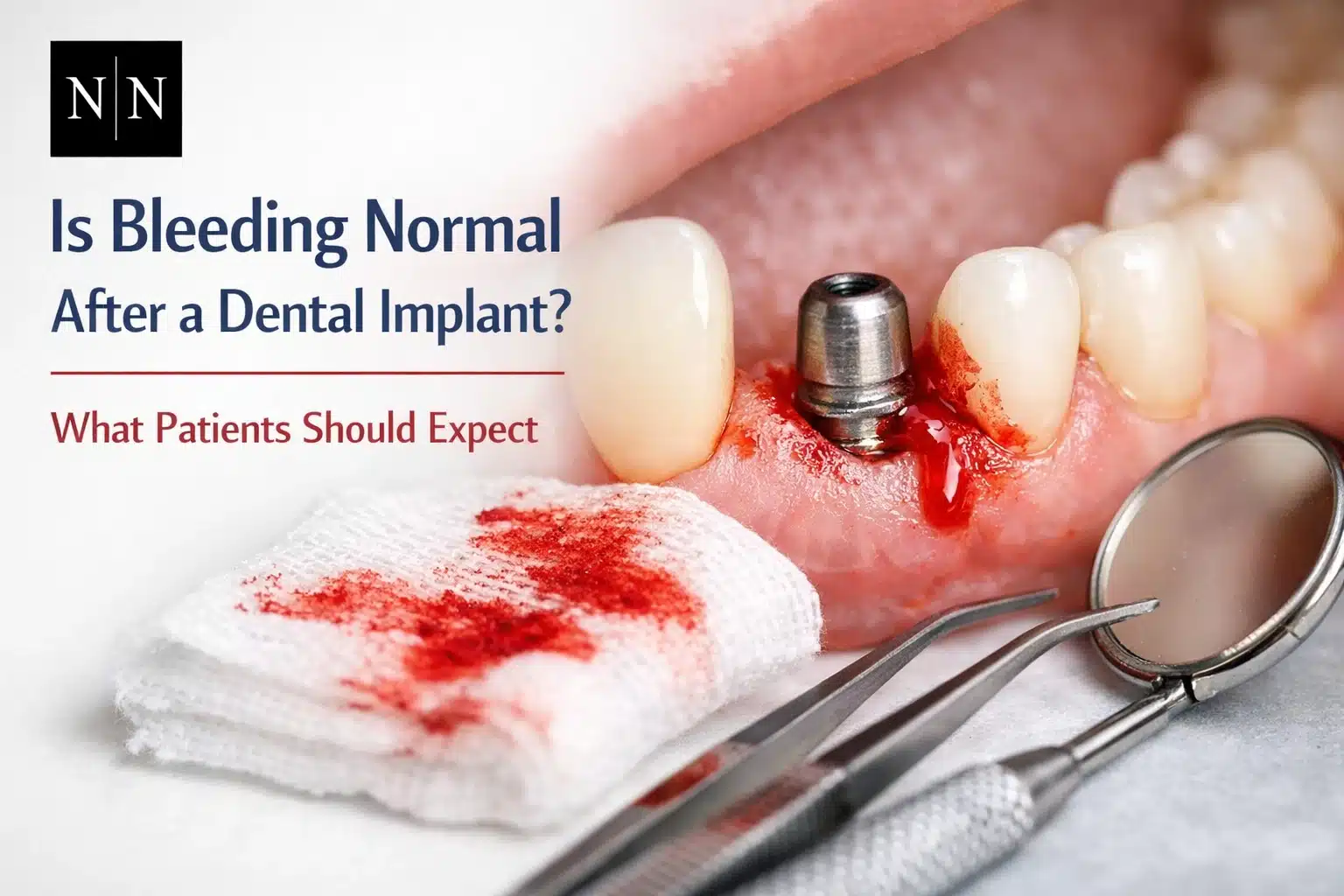
After your implant procedure, it’s common to experience minor bleeding for the first 24–48 hours. Your gums and jawbone have been gently worked on, and your body responds naturally with some blood and fluid.
Typical causes of mild bleeding include:
- Surgical trauma: Small blood vessels in your gums may bleed slightly after placement.
- Clot formation: Your body is forming a protective clot around the implant site.
- Activity levels: Strenuous activity or even brushing too aggressively can cause slight bleeding.
Minor bleeding is generally nothing to worry about. However, if it persists beyond two days, is heavy, or is accompanied by swelling, pain, or fever, it’s time to contact your dentist immediately.
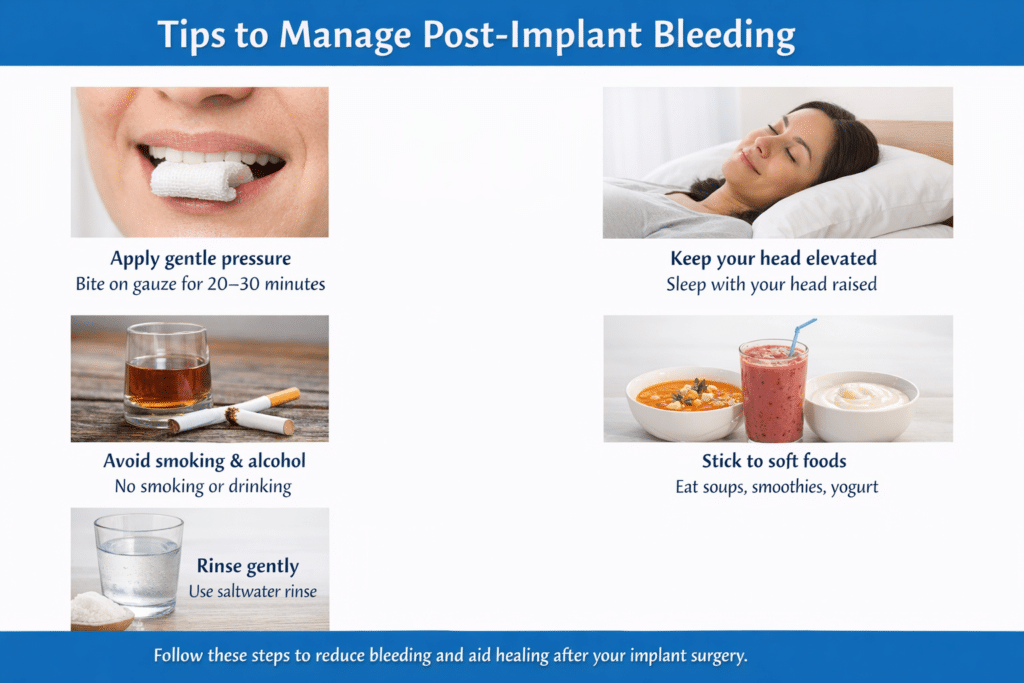
Tips to Manage Post-Implant Bleeding
Here are some practical ways to control bleeding and support healing at home:
- Apply gentle pressure: Bite on a clean gauze pad for 20–30 minutes to help form a clot.
- Keep your head elevated: Sleeping with your head slightly raised can reduce blood flow to the surgical site.
- Avoid smoking and alcohol: Both can delay healing and increase bleeding risk.
- Stick to soft foods: Soups, smoothies, and yogurt prevent trauma to the implant area.
- Rinse gently: Saltwater rinses can soothe the gums, but avoid vigorous spitting.
Following these steps helps minimize bleeding and speeds up recovery, ensuring your implant integrates properly with your jawbone.
When to Seek Professional Help
Even though minor bleeding is normal, there are times when professional evaluation is necessary:
- Continuous bleeding that soaks through gauze within an hour.
- Severe pain or swelling around the implant site.
- Signs of infection such as pus, foul taste, or fever.
- Difficulty speaking, eating, or swallowing due to implant discomfort.
At Nalbandian Dentistry, our team is trained to manage post-implant complications quickly. Burbank residents trust us for safe, effective, and reassuring care throughout the dental implant process.
Local Insight for Burbank Patients
Dental implant procedures are becoming increasingly common in Burbank, thanks to advancements in technology and minimally invasive techniques. Choosing a local dental provider like Nalbandian Dentistry means you have easy access to follow-up care, personalized advice, and a team that understands the unique needs of our community. From routine checkups to emergency guidance, our office is here for you every step of the way.
Schedule Your Follow-Up With Nalbandian Dentistry
If you’re considering dental implants or have concerns after surgery, it’s important to get guidance from a trusted local dentist. Nalbandian Dentistry specializes in safe, effective implant placement for patients in Burbank and nearby areas. Our team ensures your recovery is smooth and your smile is restored confidently.
FAQs About Bleeding After Dental Implants
Is any bleeding normal after a dental implant?
Yes, mild bleeding or oozing for the first 24–48 hours is expected. It usually resolves with gentle care.
How long should bleeding last?
Minor bleeding should gradually stop within two days. Persistent bleeding warrants a call to your dentist.
Can I brush my teeth after implant surgery?
Yes, but avoid brushing the surgical site directly for a few days. Use a soft-bristled brush around the area.
Does bleeding indicate implant failure?
Not usually. Normal post-surgical bleeding is part of healing. Implant failure is rare and usually involves other symptoms like severe pain or infection.
Should I avoid certain foods?
Yes, stick to soft, non-spicy foods and avoid hot beverages for the first few days to prevent disturbing the clot.