

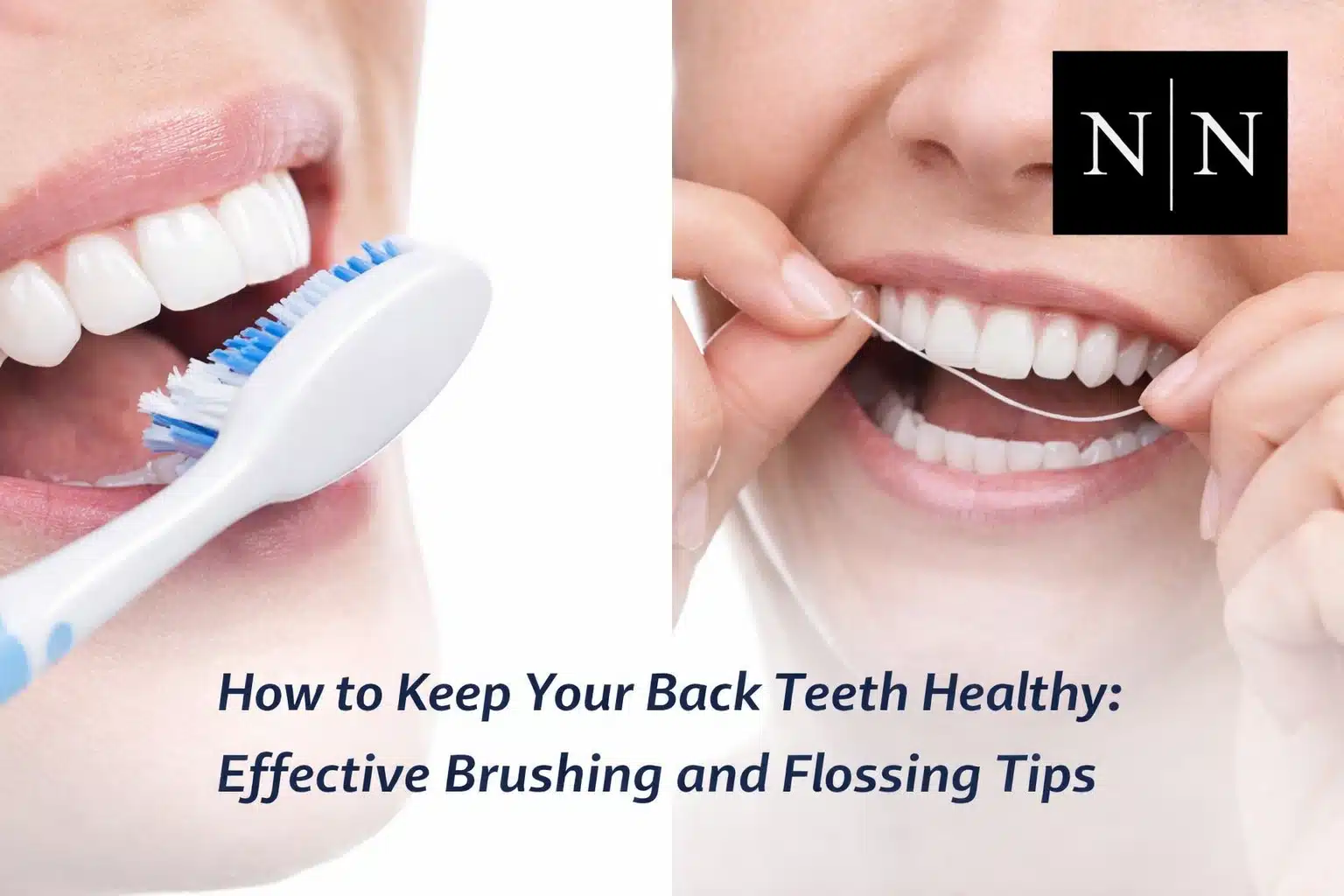
When it comes to maintaining good oral hygiene, we often focus on the front teeth, but it’s the back teeth, the molars and premolars, that are the real workhorses of your mouth. These teeth are responsible for grinding and chewing, breaking down food so it can be digested. However, they also face the highest risk of developing decay and plaque buildup. This is because back teeth have deep grooves, making them more difficult to clean thoroughly. Without proper care, cavities and gum disease can quickly take hold.
In this blog, we’ll explore effective tips on how to keep your back teeth healthy. We’ll cover brushing techniques, the importance of flossing, and alternative cleaning tools to ensure you’re taking the best care of your back teeth.
Why Back Teeth Need Extra Care
Your back teeth are essential to your overall dental health. Molars and premolars are designed to break down food into smaller, digestible pieces through their flat, broad surfaces and deep grooves.
However, these same grooves also trap food particles and bacteria, creating the perfect environment for plaque buildup. Plaque is a sticky film of bacteria that can cause tooth decay and gum disease if left untreated.
Unlike the front teeth, which are more exposed and easier to clean, the back teeth are harder to reach with a toothbrush. Their position makes it more challenging to brush effectively, especially the molars farthest back in the mouth. This difficulty increases the likelihood of food debris and plaque buildup, which can lead to cavities and gum irritation.
Because of their structure and position, back teeth are more susceptible to issues such as cavities and gum disease, making it crucial to give them extra attention during your oral hygiene routine. But don’t worry. Simple, effective techniques can help keep your back teeth healthy.
The Right Way to Brush Your Back Teeth
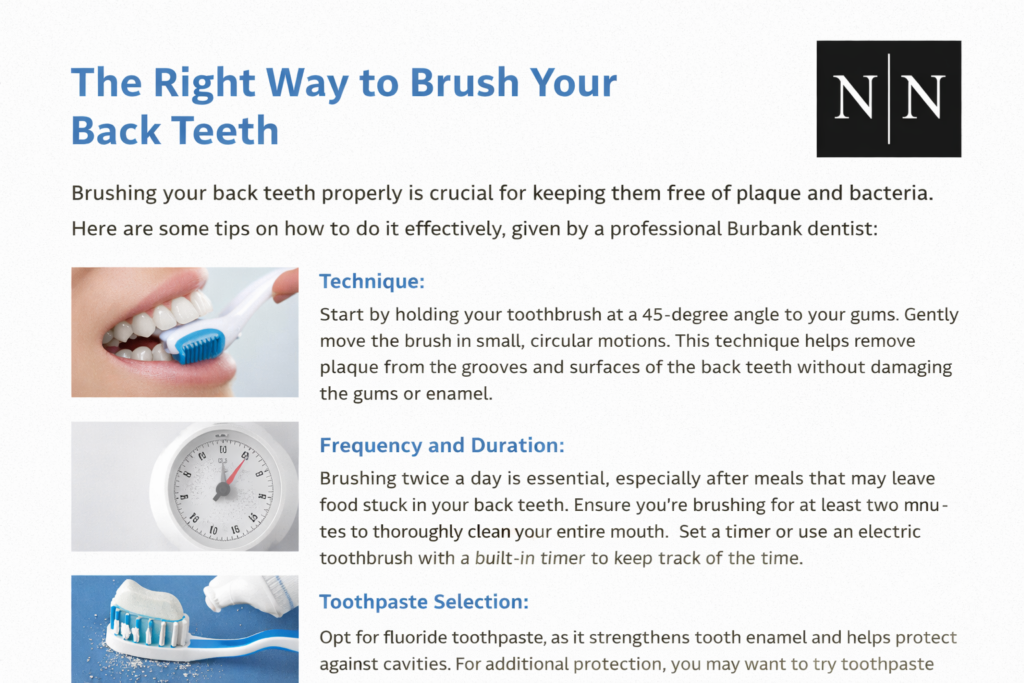
Brushing your back teeth properly is crucial for keeping them free of plaque and bacteria. Here are some tips on how to do it effectively, given by a professional Burbank dentist:
- Technique: Start by holding your toothbrush at a 45-degree angle to your gums. Gently move the brush in small, circular motions. This technique helps remove plaque from the grooves and surfaces of the back teeth without damaging the gums or enamel.
- Frequency and Duration: Brushing twice a day is essential, especially after meals that may leave food stuck in your back teeth. Ensure you’re brushing for at least two minutes to thoroughly clean your entire mouth. Set a timer or use an electric toothbrush with a built-in timer to keep track of the time.
- Toothpaste Selection: Opt for fluoride toothpaste, as it strengthens tooth enamel and helps protect against cavities. For additional protection, you may want to try toothpaste that contains baking soda to help clean deeper into the grooves of your back teeth, ensuring a more thorough clean.
By following these simple tips, you can ensure that your back teeth stay healthy and free from plaque buildup. Remember, proper brushing not only prevents cavities but also supports gum health by removing bacteria that can cause gum disease.
The Importance of Flossing for Your Back Teeth
While brushing is essential, it’s not enough to reach every surface of your back teeth. Flossing is the best way to clean between teeth, especially the tight spaces between your molars. If you’re not flossing, you’re missing up to 40% of your tooth’s surface!
Here’s why flossing is vital for the health of your back teeth:
- Prevents Gum Disease: Flossing removes food particles and plaque from between your teeth, areas where your toothbrush can’t reach. This helps prevent gum disease, which starts when plaque builds up along the gumline.
- Prevents Cavities: When plaque sits on your teeth for too long, it can lead to cavities. Flossing removes plaque from between your back teeth, stopping cavities before they start.
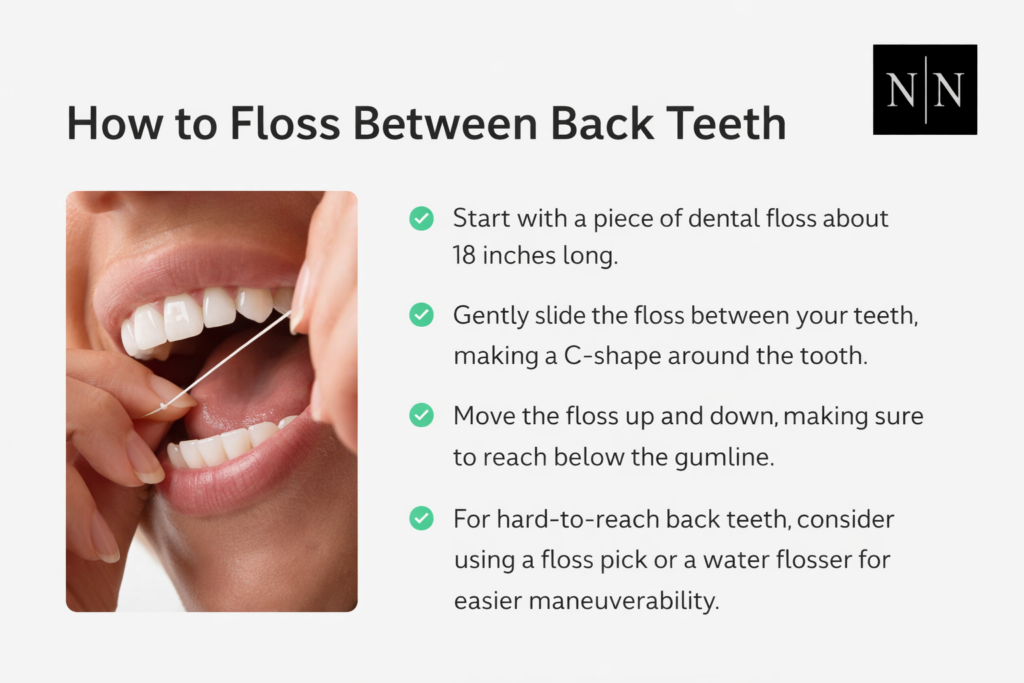
How to Floss Between Back Teeth:
- Start with a piece of dental floss about 18 inches long.
- Gently slide the floss between your teeth, making a C-shape around the tooth.
- Move the floss up and down, making sure to reach below the gumline.
- For hard-to-reach back teeth, consider using a floss pick or a water flosser for easier maneuverability.
Flossing once a day, especially before bedtime, will ensure that your back teeth stay clean and healthy.
The Benefits of Interdental Brushes and Other Tools
If you find flossing difficult, you’re not alone. Many people struggle to clean between their back teeth effectively. Thankfully, some alternatives make the process easier:
- Interdental Brushes: These small, cone-shaped brushes can be used to clean between your teeth. They come in various sizes, so you can choose one that fits the gaps between your back teeth. Interdental brushes are excellent for removing plaque and food particles, especially for those with larger spaces between their teeth.
- Soft Picks: Soft picks are similar to interdental brushes but are made from soft, rubbery material. They’re a great option for those with sensitive gums or small gaps between their teeth.
- Water Flossers: Water flossers use a stream of pulsating water to flush out debris and plaque from between teeth and along the gumline. They’re especially helpful for people with braces or dental work, as they’re gentle yet effective at cleaning hard-to-reach areas.
If you struggle to floss, try one of these alternatives for maintaining the health of your back teeth. These tools are not only effective but also easier to use for individuals with limited dexterity or other concerns.
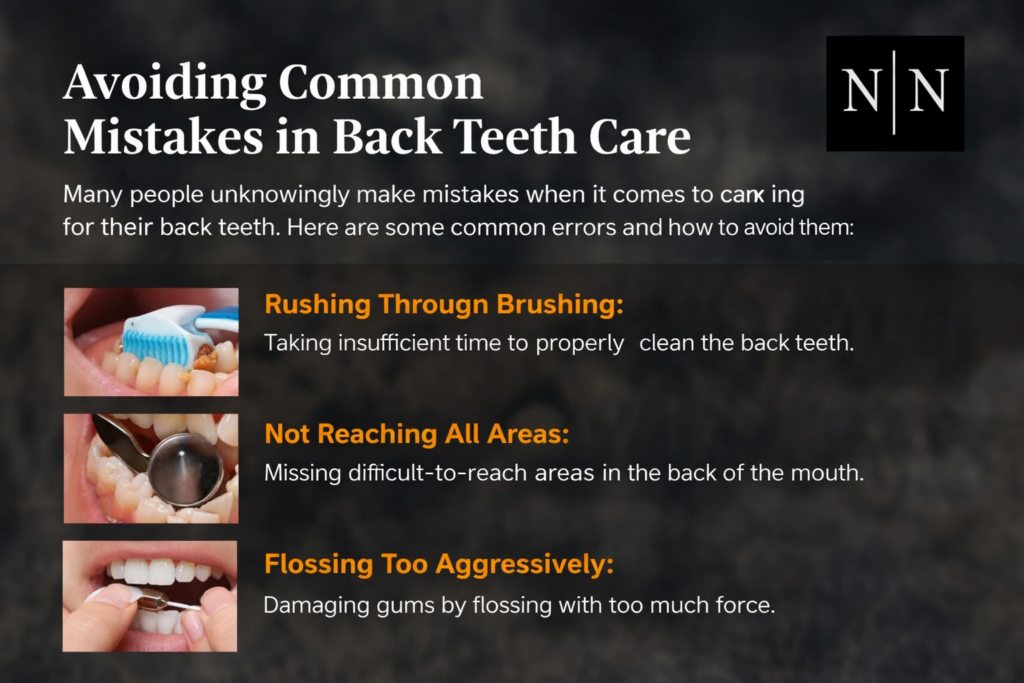
Avoiding Common Mistakes in Back Teeth Care
Many people unknowingly make mistakes when it comes to caring for their back teeth. Here are some common errors and how to avoid them:
- Rushing Through Brushing: It’s easy to rush your brushing routine, especially when you’re in a hurry. However, brushing too quickly means you’re not giving your back teeth the attention they need. Make sure you’re brushing for at least two minutes and thoroughly cleaning all areas of your mouth, including the back teeth.
- Not Reaching All Areas: Back teeth have more surface area and deep grooves, so it’s important to make sure you’re brushing all surfaces. Don’t neglect the chewing surfaces of your molars, as this is where food and plaque accumulate most.
- Flossing Too Aggressively: Flossing should be gentle. Pressing too hard can damage your gums and irritate them. Be gentle when inserting the floss between your teeth, and avoid snapping the floss.
To avoid these mistakes, take your time with both brushing and flossing. Remember, consistency is key to ensuring your back teeth stay healthy.
Additional Tips for Healthy Back Teeth
Maintaining healthy back teeth isn’t just about brushing and flossing. Here are some additional tips to keep your back teeth in top shape:
- Dietary Tips: Avoid sugary snacks that can promote tooth decay, especially sticky foods that cling to the grooves of your back teeth. After meals, drink plenty of water to rinse away any lingering food particles and keep your mouth hydrated.
- Regular Dental Checkups: Regular visits to your local Burbank dentist like Nalbandian Dentistry, are essential for maintaining back teeth health. Your dentist will check for early signs of decay, gum disease, and other issues that may not be visible to the naked eye.
A healthy diet, combined with regular checkups, can help you maintain your back teeth for years to come.
Keeping your back teeth healthy is crucial for your overall dental health. By following these effective brushing and flossing tips, using the right tools, and avoiding common mistakes, you can ensure that your back teeth remain free from decay and gum disease.
If you’re due for a dental checkup or need advice on your oral hygiene routine, don’t hesitate to reach out to Nalbandian Dentistry. Our team is here to help you maintain a healthy smile. Schedule your appointment today and take the next step toward a healthier you!
People Also Ask
Can brushing alone keep my back teeth healthy?
No, brushing is important, but flossing is also essential to clean between your back teeth and remove plaque.
What’s the best way to floss my back teeth?
Use gentle, sawing motions to slide floss between your teeth and form a C-shape around each tooth for thorough cleaning.
What tools can I use to clean between my back teeth?
Interdental brushes, soft picks, and water flossers are excellent alternatives if traditional flossing is difficult.
How do I properly brush my back teeth?
Hold your toothbrush at a 45-degree angle, use circular motions, and focus on cleaning all surfaces of your back teeth.
Can I use mouthwash for extra protection?
Yes, mouthwash can help kill bacteria and freshen your breath, but it should be used alongside brushing and flossing.