

Are you tired of dealing with your dentures and wondering if dental implants could be the right solution for you? If you’ve been living with dentures for a while, you may have noticed the challenges that come with them. Whether it’s discomfort, difficulty eating, or the inconvenience of constantly adjusting them, dentures can be a hassle. But what if there was a permanent solution that could give you a more natural and comfortable smile?
At Nalbandian Dentistry, we believe everyone deserves a confident smile. Moving from dentures to dental implants is a life-changing decision that can significantly improve your quality of life.
In this blog, we’ll explore the benefits of upgrading to dental implants and how this procedure can transform your smile and restore your dental health.
Understanding Dentures: Why You Might Want an Upgrade
What Are Dentures?
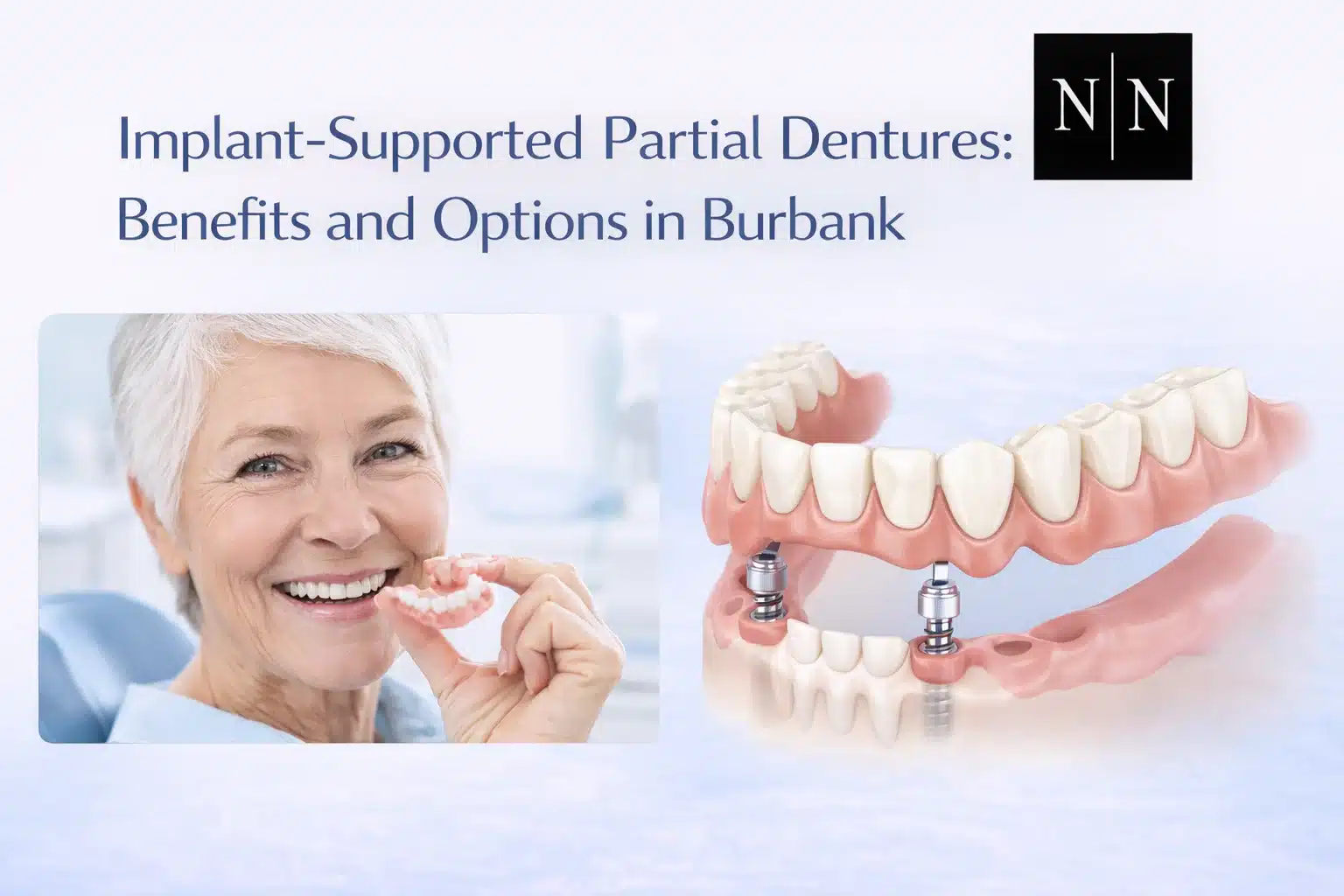
Dentures are removable appliances that replace missing teeth and surrounding tissues. They’re typically made from acrylic or a combination of acrylic and metal. While they restore function and appearance, they often require regular adjustments to maintain a proper fit.
Challenges with Dentures
While dentures can restore some functionality, they come with their own set of challenges. One common issue is discomfort. Dentures can cause sore spots in the mouth, especially if they don’t fit well. This discomfort is often aggravated when eating, as the dentures can slip or cause difficulty chewing certain foods.
Additionally, dentures require regular maintenance. They need to be cleaned daily, and they can sometimes break or wear down over time. For some people, the need for adhesives to keep the dentures in place is a constant inconvenience. These issues can often lead to frustration and a decreased quality of life.
Why Consider Switching?
Given these challenges, it’s no wonder that many people seek a more permanent solution. Dental implants in Burbank offer a solution that can provide better comfort, stability, and long-term results. Unlike removable dentures, dental implants are surgically placed into the jawbone and provide a fixed, natural-looking replacement for missing teeth.
What Are Dental Implants?
Definition
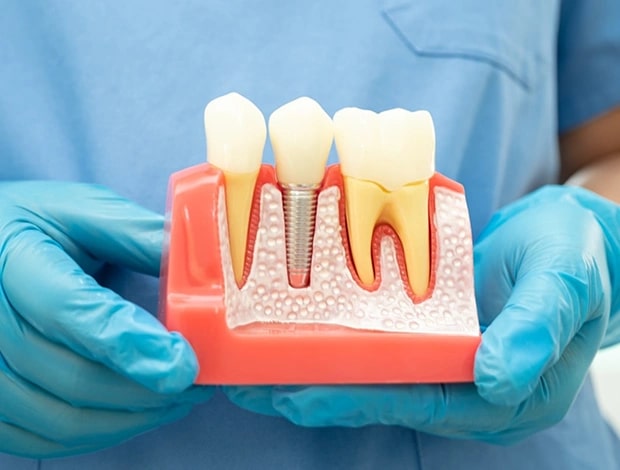
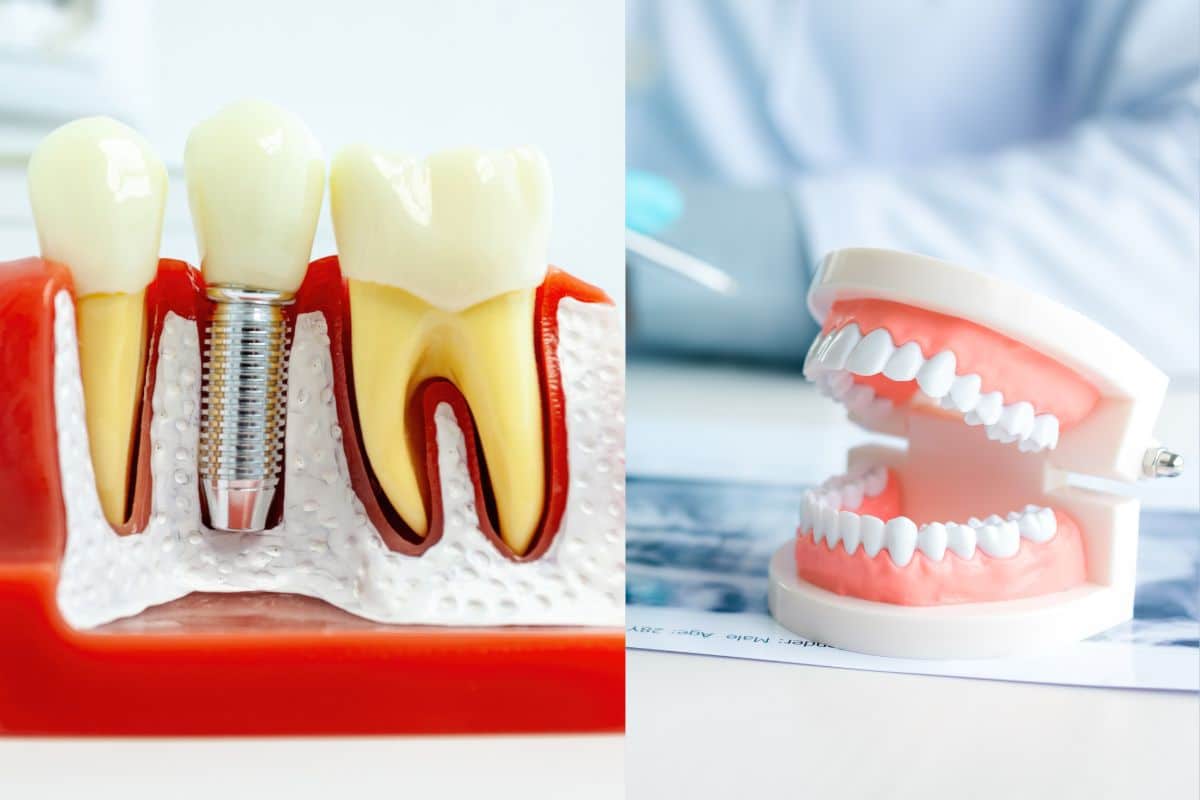
Dental implants are titanium posts surgically placed into your jawbone, acting as replacements for the roots of missing teeth. Once placed, they fuse with the bone through a process called osseointegration, creating a strong and durable foundation for a crown or bridge.
How Implants Work
The dental implant process begins with a consultation and evaluation. If you’re a good candidate for implants, the dentist will place a small titanium post into your jawbone. Over several months, the post fuses with the bone, ensuring it becomes a stable base for the final crown. Once healed, the crown is placed on top, providing a natural appearance and full functionality.
Benefits of Dental Implants
The main advantages of dental implants include:
- Comfort: Implants are stable and eliminate the need for adhesives, unlike dentures.
- Functionality: You can chew your food comfortably, without worrying about your teeth slipping or causing discomfort.
- Long-Term Durability: With proper care, dental implants can last a lifetime, offering a long-term solution to tooth loss.
- Natural Look: Implants look and feel like natural teeth, blending seamlessly with your smile.
Moving from Dentures to Dental Implants: What to Expect
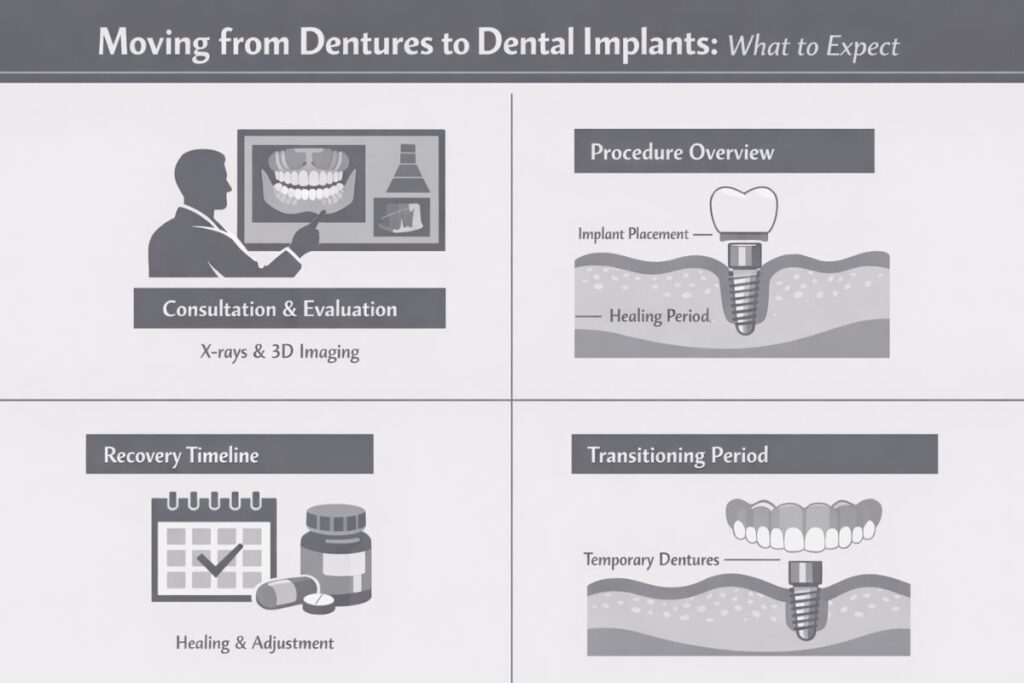
Consultation and Evaluation
The first step in transitioning from dentures to dental implants is a consultation with your dentist. During this appointment, the dentist will evaluate the condition of your gums and jawbone to determine if implants are the right choice. X-rays and 3D imaging may be used to assess bone density and the structure of your mouth.
Procedure Overview
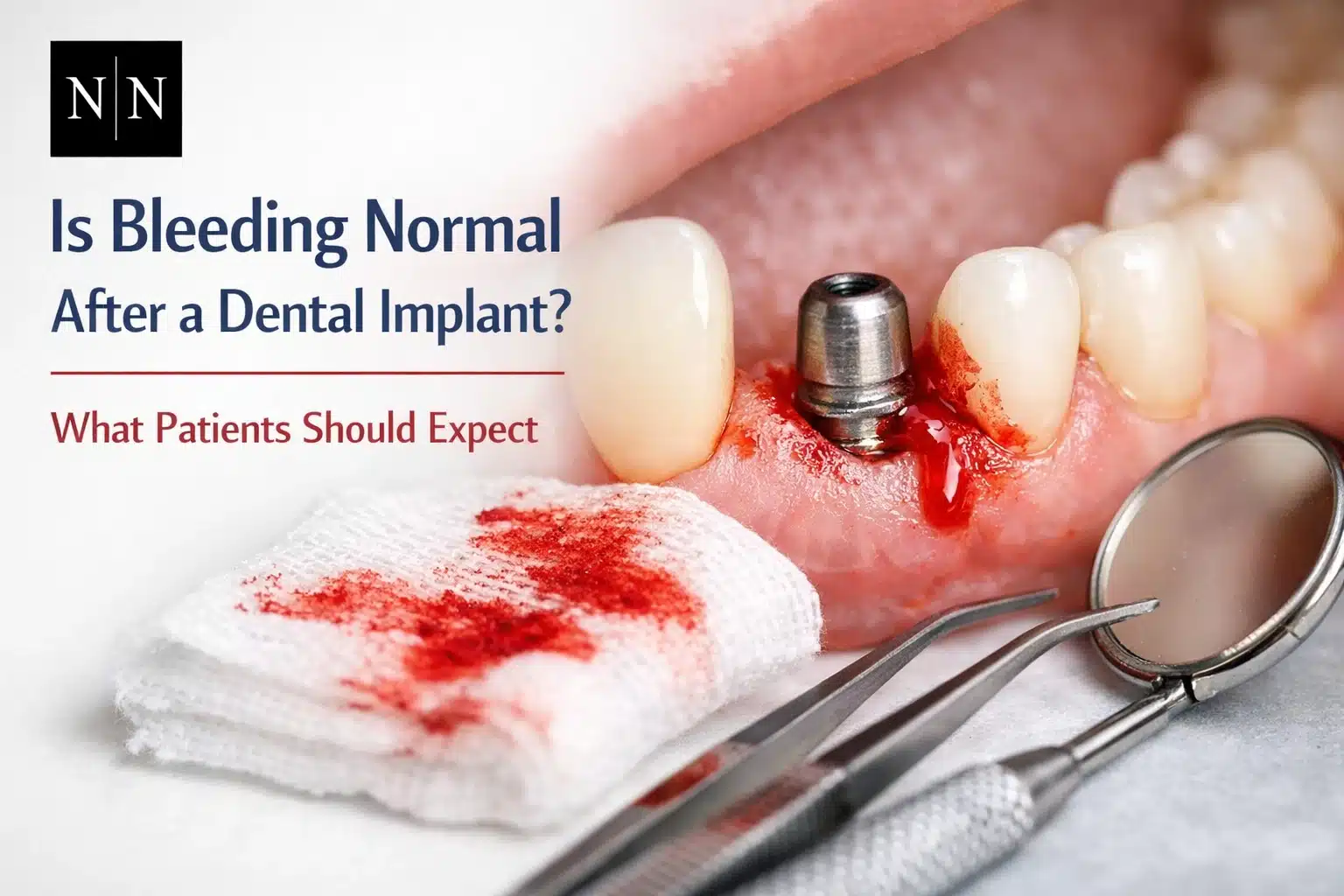
If you’re a good candidate for implants, the procedure will begin with the placement of the titanium posts into your jawbone. This process may require bone grafting if your jawbone isn’t thick enough to support the implant. Once the posts are placed, a healing period of several months is required to allow the implants to integrate with the bone.
After the healing process, the dentist will place custom-made crowns on the implants, providing a natural-looking and fully functional smile. The entire process typically takes several months but results in a permanent and comfortable solution for missing teeth.
Recovery Timeline
The recovery period can vary depending on the complexity of the procedure. In the first few days after surgery, you may experience mild swelling or discomfort, but this can typically be managed with prescribed pain relievers. Over the next few weeks, the healing process continues as the implant fuses with the jawbone. While recovery is different for everyone, most patients can resume normal activities after about a week.
Transitioning Period
During the healing process, patients who are transitioning from dentures to implants may require a temporary denture or bridge. This ensures that you can continue to eat and speak comfortably while waiting for the permanent implants to be placed. Your dentist will work with you to ensure that your temporary solution fits well and doesn’t cause discomfort.
The Long-Term Benefits of Dental Implants Over Dentures
Improved Functionality
One of the most significant advantages of dental implants is their ability to restore full chewing capacity. Unlike dentures, which may slip or shift when eating, dental implants provide a stable foundation that allows you to enjoy a wide variety of foods without concern.
Enhanced Comfort
Dental implants eliminate the discomfort and inconvenience of removable dentures. Since implants are fixed securely in your mouth, they feel just like natural teeth and won’t cause sores or irritation.
A Natural Look
Implants are designed to blend seamlessly with your natural teeth. They are custom-made to match the color, size, and shape of your existing teeth, providing a smile that looks and feels authentic.
Longevity
Dental implants are a long-lasting solution for missing teeth. With proper care, they can last a lifetime, while dentures typically need to be replaced every 5 to 10 years. Implants also help preserve the structure of your jawbone, preventing the bone loss that often occurs with dentures.
Are You a Good Candidate for Dental Implants?
Eligibility Criteria
Good candidates for dental implants typically have healthy gums, adequate bone mass in the jaw, and a commitment to maintaining proper oral hygiene. If you have gum disease or bone loss, your dentist may recommend treatments to address these issues before proceeding with implants.
Common Misconceptions
Many people mistakenly believe that they are too old for dental implants in Burbank or that they can’t have implants due to bone loss. However, advances in implant technology and bone grafting procedures have made it possible for most individuals to qualify for implants, regardless of age or bone condition.
How to Take Care of Your New Smile
Post-Implant Care
After your implants are placed, it’s important to follow your dentist’s instructions for care. This may include avoiding hard foods and taking prescribed medications to manage swelling and pain. Be sure to attend follow-up appointments to monitor the healing process.
Daily Hygiene
Good oral hygiene is essential for the longevity of your implants. Brush your implants as you would your natural teeth, and floss daily to prevent plaque buildup. Regular check-ups with your dentist will ensure that your implants remain in top condition.
Upgrading to dental implants is a transformative decision that can improve your quality of life by providing a comfortable, natural-looking, and long-lasting solution for missing teeth.
At Nalbandian Dentistry, we’re here to guide you through every step of the process, ensuring that your transition from dentures to dental implants is smooth and successful. Contact us today to schedule a consultation and take the first step towards a brighter, more confident smile.
What People Ask
1. How long do dental implants last?
With proper care, dental implants can last a lifetime, unlike dentures, which typically need replacement every 5-10 years.
2. How long does the implant procedure take?
The implant process can take several months, including healing time for the post to fuse with the jawbone and placement of the final crown.
3. How do I care for my dental implants?
Treat implants like natural teeth, brush twice daily, floss regularly, and visit your dentist for routine check-ups.
4. Do dental implants require special cleaning?
No, dental implants require the same cleaning as natural teeth, including regular brushing and flossing.
5. How soon can I eat after getting dental implants?
You’ll need to avoid hard or sticky foods for a few weeks after the procedure. Your dentist will guide you on when it’s safe to resume normal eating.