


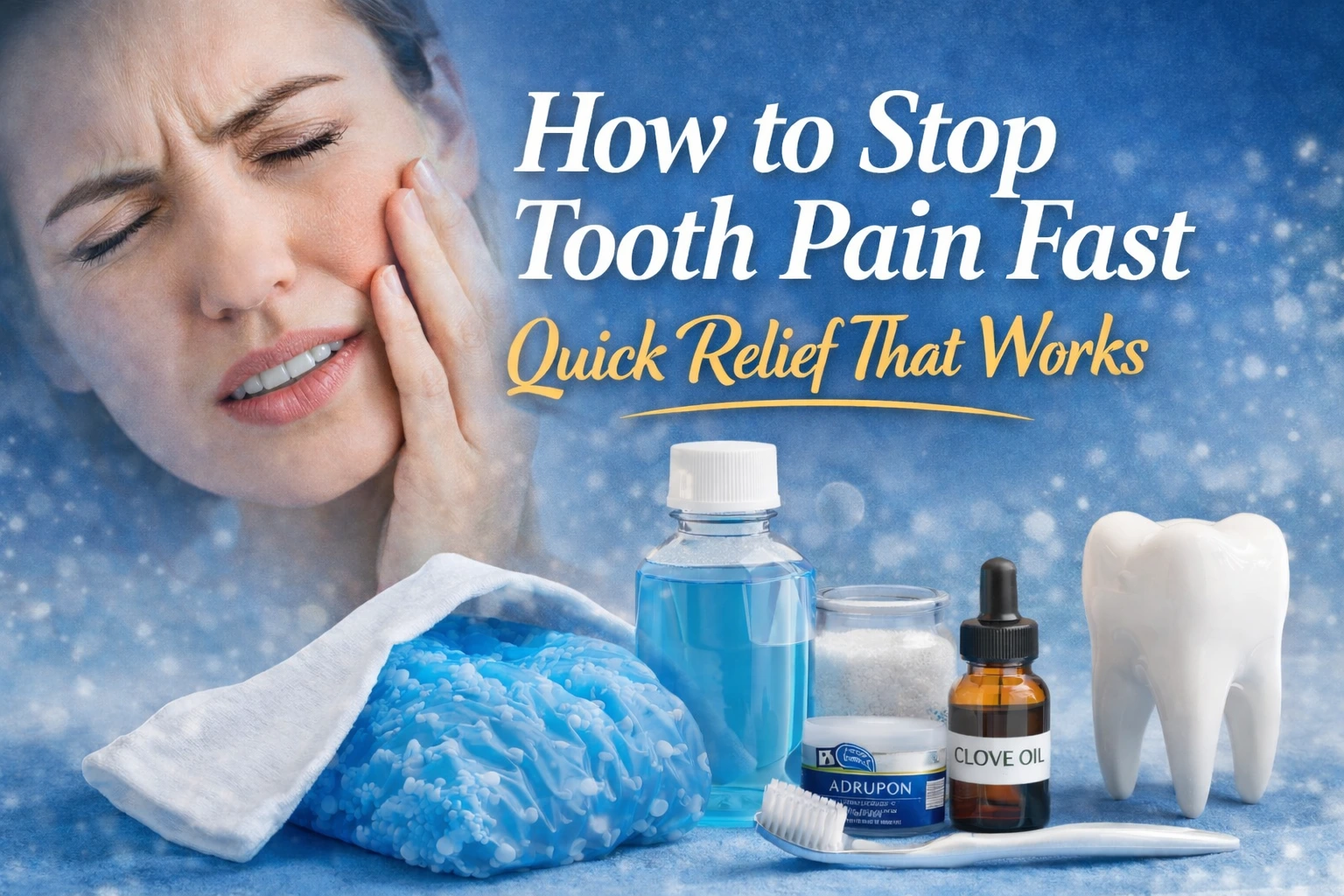
Tooth pain has a way of appearing at the worst possible moment — during dinner, late at night, or right before an important meeting. Whether it’s a constant dull ache or a sharp, throbbing sensation, tooth discomfort can quickly disrupt your focus and sleep.
The good news? There are fast and effective ways to ease tooth pain. This guide explains immediate home remedies, over-the-counter solutions, and professional treatments that provide lasting relief.
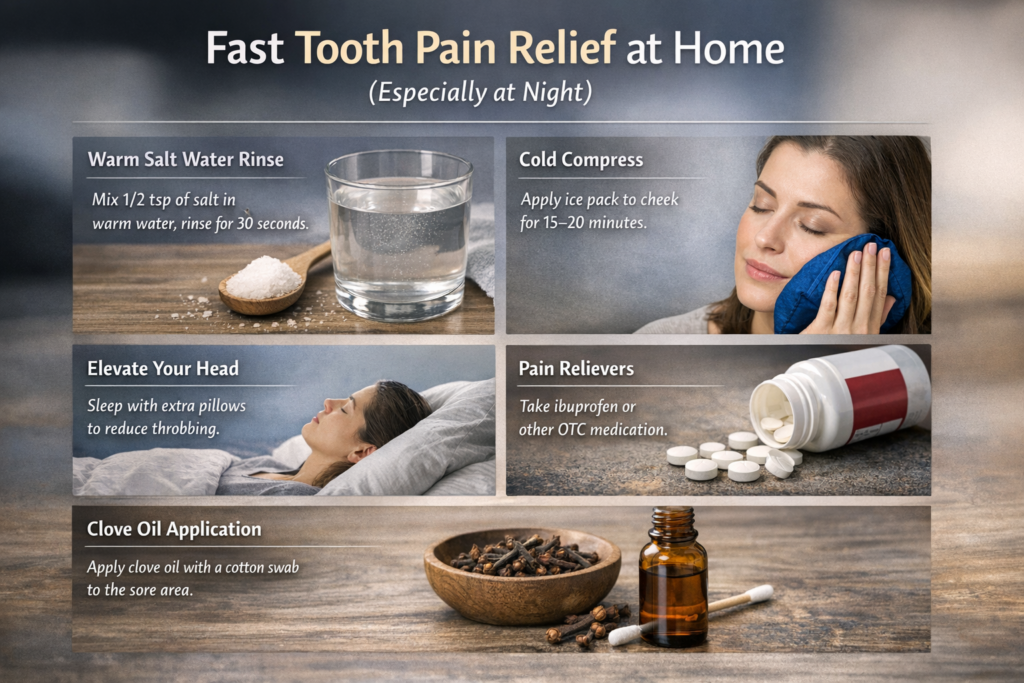
Fast Tooth Pain Relief at Home (Especially at Night)
Toothaches often feel worse after dark. When you lie down, increased blood flow to your head can intensify pressure and sensitivity. Here’s how to calm the pain quickly:
1. Warm Salt Water Rinse
Mix half a teaspoon of salt into warm water and rinse for 30 seconds. This helps reduce inflammation, flush out bacteria, and soothe irritated gums.
2. Cold Compress
Apply an ice pack to the outside of your cheek for 15–20 minutes. Cold temperatures numb the area and minimize swelling.
3. Elevate Your Head
Keep your head propped up with pillows. Staying slightly upright reduces blood pressure in the affected area and lessens throbbing.
4. Over-the-Counter Pain Relievers
Medications like ibuprofen can decrease inflammation and provide temporary relief. Always follow dosage instructions carefully.
5. Clove Oil Application
Clove oil contains eugenol, a natural numbing agent. Apply a small amount with a cotton swab directly to the painful area.
These methods can provide short-term relief — but they don’t treat the underlying cause.
What Can Relieve Tooth Pain Quickly?
While no remedy works for everyone, these options often provide rapid comfort:
- Topical numbing gels containing benzocaine
- Cold therapy to reduce nerve sensitivity
- Peppermint tea bags for mild numbing and cooling
- Diluted hydrogen peroxide rinse to reduce bacteria
- Garlic paste for its natural antibacterial properties
Keep in mind, these are temporary measures. Persistent pain usually signals a deeper issue.
Common Causes of Tooth Pain
Understanding why your tooth hurts is essential for proper treatment. Typical causes include:
- Tooth decay or cavities
- Gum disease
- Cracked or chipped teeth
- Worn enamel causing sensitivity
- Impacted wisdom teeth
- Infection or abscess
- Sinus pressure affecting upper teeth
If discomfort lasts longer than 48 hours, professional evaluation is strongly recommended.
How Dental Professionals Treat Tooth Pain
While home remedies help manage symptoms, only professional care can eliminate the source of pain.
At Nalbandian Dentistry, treatment begins with a thorough examination and digital imaging to identify the problem accurately. Depending on the diagnosis, treatment options may include:
• Tooth-Colored Filling
Repairs damage caused by cavities.
• Dental Crown
Restores cracked or weakened teeth.
• Root Canal Therapy
Removes infected pulp to save the natural tooth.
• Gum Therapy
Treats inflammation or infection affecting surrounding tissues.
• Tooth Extraction
Reserved for severely damaged teeth beyond repair.
Seeking help from a trusted Burbank Dentist ensures both fast relief and long-term protection.
Why Tooth Pain Feels Worse at Night
Many people notice toothaches intensify after bedtime. This happens because:
- Increased blood flow raises pressure in the tooth
- You’re lying flat
- Fewer distractions make pain more noticeable
To reduce nighttime discomfort:
- Sleep with your head elevated
- Avoid sugary or acidic snacks before bed
- Use a cold compress before sleeping
When Tooth Pain Is an Emergency
Some symptoms require immediate attention:
- Severe, persistent pain
- Facial or jaw swelling
- Fever
- Pus around the tooth
- Pain after injury
These signs may indicate an abscess or spreading infection. Immediate care prevents serious complications.
Natural Remedies for Mild Tooth Pain
If you prefer natural solutions, these options may help temporarily:
- Salt and pepper paste
- Vanilla extract (contains mild numbing alcohol)
- Raw onion or ginger (natural antibacterial properties)
- Cold milk rinse to soothe sensitivity
Again, these are temporary solutions — not permanent fixes.
How to Prevent Future Tooth Pain
The best way to stop tooth pain fast is to prevent it from happening again.
Daily Habits That Protect Your Smile:
- Brush twice daily with fluoride toothpaste
- Floss every night
- Replace your toothbrush every three months
- Schedule routine cleanings
- Limit sugar and acidic beverages
Preventive care is far easier — and less painful — than emergency treatment.
When to Skip Home Remedies
Avoid delaying professional care if:
- Pain lasts more than two days
- There is visible swelling or bleeding
- You suspect infection
- A tooth is cracked or broken
Ignoring these symptoms may worsen the condition.
Conclusion
Tooth pain can feel overwhelming, but quick action can provide relief. From saltwater rinses and cold compresses to advanced dental treatments, there are multiple ways to stop discomfort fast.
However, lasting relief requires identifying and treating the root cause. If you’re experiencing ongoing pain, the team at Nalbandian Dentistry is here to provide gentle, effective care tailored to your needs.
Don’t let tooth pain control your day — prompt attention leads to faster recovery and a healthier smile.
FAQs
How can I relieve tooth pain immediately?
Use a cold compress, rinse with salt water, or take ibuprofen for temporary relief.
Why does tooth pain worsen at night?
Lying down increases blood flow to your head, which intensifies pressure and sensitivity.
Can stress cause tooth pain?
Yes. Stress may lead to teeth grinding (bruxism), causing jaw and tooth discomfort.
Does hydrogen peroxide help?
A diluted rinse can reduce bacteria and inflammation, but it won’t cure infection.
When should I seek professional care?
If pain persists beyond 48 hours or is accompanied by swelling or fever.