



Have you ever reached for a piece of chewing gum to freshen your breath, only to find yourself dealing with jaw pain later? If you’re someone with Temporomandibular Joint (TMJ) Disorder, this seemingly harmless habit can actually make your symptoms worse. TMJ Disorder is a common condition that affects the jaw joint and the muscles that control jaw movement, leading to discomfort and pain.
While many people chew gum as a way to curb bad breath or pass the time, it may unknowingly aggravate an already sensitive jaw. In this blog, we’ll explore how chewing gum can impact TMJ and why it’s crucial to be mindful of your habits if you suffer from this condition.
Understanding TMJ Disorder
TMJ Disorder refers to a group of symptoms affecting the temporomandibular joint, the hinge connecting your jawbone to your skull. This joint is responsible for movements like opening and closing your mouth, chewing, and speaking. When something goes wrong with the TMJ, it can lead to a variety of painful symptoms. Common signs of TMJ Disorder include:
- Jaw pain: This can occur on one or both sides of your jaw.
- Headaches: Tension in the jaw muscles often leads to headaches, especially around the temples.
- Clicking or popping sounds: You may hear or feel a popping sensation when opening or closing your mouth.
- Difficulty opening your mouth: This may make it challenging to chew food or speak comfortably.
Several factors can contribute to TMJ Disorder, including:
- Teeth grinding (often linked to stress)
- Injury to the jaw or head
- Poor posture, which strains the jaw muscles
- Arthritis or inflammation affecting the joint
The temporomandibular joint itself is designed for smooth, controlled movements. However, when there’s an imbalance, such as a misalignment or excessive muscle tension, it can lead to jaw dysfunction, making everyday activities like chewing gum or even talking painful.
The Impact of Chewing Gum on Your Jaw
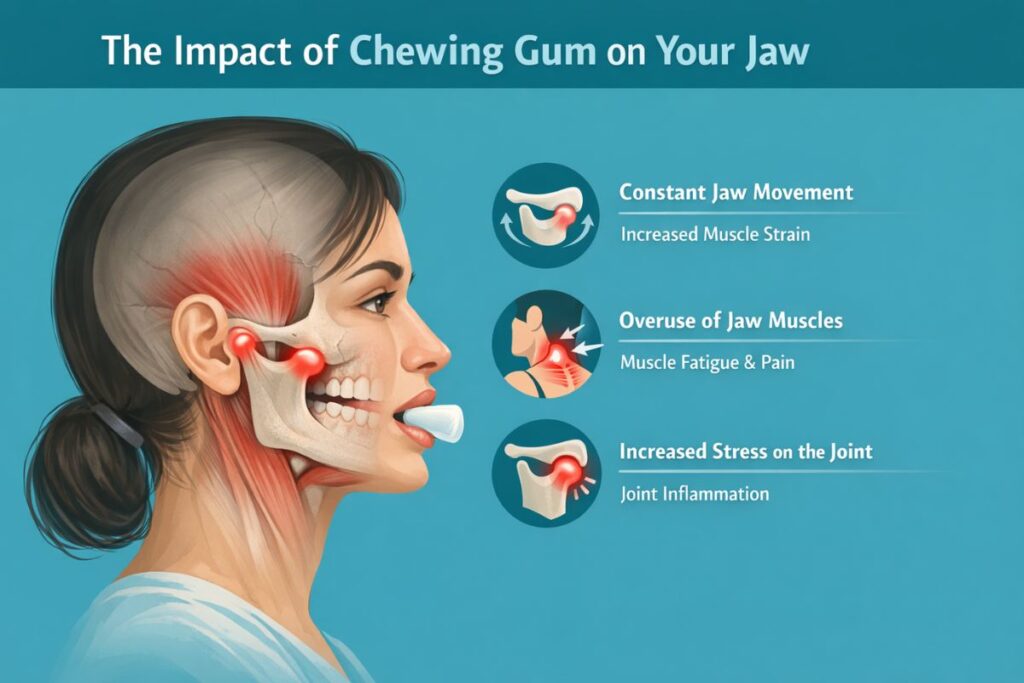
While chewing gum may seem like a simple activity, it involves constant, repetitive movement of the jaw. For those with TMJ Disorder, this can spell trouble.
Constant Jaw Movement
When you chew gum, the jaw muscles are constantly engaged. This repetitive motion puts stress on the TMJ, exacerbating any existing issues. For someone already struggling with jaw pain, the motion of chewing can increase muscle fatigue and strain, making symptoms worse.
Overuse of Jaw Muscles
Chewing gum requires the jaw muscles to work continuously. This can lead to muscle fatigue and overuse, which is especially detrimental for those suffering from TMJ. Overworked muscles become tight and painful, leading to discomfort not only in the jaw but also in the surrounding areas such as the neck and shoulders.
Increased Stress on the Joint
For those with TMJ Disorder, the joint is already under pressure. Chewing gum adds extra stress, causing the joint to work harder than it normally would. This can lead to increased inflammation, making it harder to move the jaw without pain. In the long run, the added strain can worsen TMJ symptoms and even lead to further damage to the joint.
The Link Between Chewing Gum and TMJ Symptoms
Trigger for Pain
The repetitive motion and force involved in chewing gum can exacerbate TMJ-related pain, especially for those who are already prone to jaw discomfort. Each chew puts strain on the temporomandibular joint (TMJ) and the surrounding muscles, intensifying existing tension.
When you chew gum, the constant opening and closing of the jaw forces the muscles to work overtime, which can lead to muscle fatigue, pain, and discomfort. For individuals with TMJ disorder, even mild activities like chewing gum can trigger or worsen these sensations, leading to sharper, more frequent pain.
Worsening Inflammation
Chewing gum not only triggers pain but can also worsen inflammation in the TMJ area. When you chew for extended periods, the muscles surrounding the jaw become overworked, which can result in inflammation. This inflammation can restrict the jaw’s range of motion, making it harder to open the mouth or move it comfortably.
Over time, the continuous strain from chewing gum can lead to chronic inflammation, contributing to long-term pain and increasing the severity of TMJ symptoms. The longer this inflammation persists, the harder it becomes to find relief, requiring more extensive treatment options to manage the condition.
Additional Concerns
Frequent gum chewing doesn’t just affect the TMJ. It can also contribute to other issues like headaches and tooth wear. The stress placed on the jaw muscles can trigger tension headaches, which are common among people with TMJ disorder.
Additionally, the pressure from chewing gum can lead to tooth wear, especially for those who grind or clench their teeth. The added force can erode enamel and even cause tooth damage over time. While chewing gum may seem harmless, for those with TMJ disorder, it can exacerbate a range of issues that impact the overall health of the jaw and teeth.
Alternative Solutions for TMJ Relief

If you suffer from TMJ Disorder and have been using chewing gum as a way to freshen your breath or reduce stress, it’s time to consider alternatives that won’t worsen your symptoms.
Non-Chewing Alternatives
Instead of chewing gum, try using mouthwash or mints for freshening your breath. These alternatives don’t involve repetitive jaw movement and are much gentler on your TMJ. If you’re looking to keep your breath fresh throughout the day, try sugar-free breath sprays or lozenges instead.
Exercises and Stretches
There are several jaw exercises and stretches designed to relieve tension in the TMJ and strengthen the muscles around the jaw. Gentle stretches can help improve flexibility and reduce muscle stiffness, helping to prevent flare-ups of TMJ symptoms. Some people benefit from applying warm or cold compresses to the affected area to ease pain and reduce inflammation.
Lifestyle Changes
Stress reduction plays a huge role in managing TMJ Disorder. Practices like meditation, yoga, or deep breathing can help lower stress levels, reducing the likelihood of clenching or grinding your teeth. Additionally, maintaining good posture and avoiding excessive jaw movements will also help protect the TMJ from further strain.
When to See a Dentist or Specialist
If you’re experiencing persistent TMJ pain or discomfort, it’s crucial to seek professional help. A dentist who specializes in TMJ treatment in Burbank, like those at Nalbandian Dentistry, can provide you with tailored solutions to alleviate your symptoms and prevent further damage.
Seeking Professional Help
If chewing gum, jaw pain, or clicking persists, it’s time to schedule an appointment. A TMJ specialist will conduct an assessment to determine the extent of the disorder and recommend appropriate treatment options.
Treatment Options
Treatment for TMJ can vary depending on the severity of the condition. Some common options include wearing splints to prevent teeth grinding, physical therapy, or even restorative procedures to realign the jaw. In more severe cases, surgery may be necessary, but this is typically considered a last resort.
The Importance of Early Intervention
Seeking early treatment can prevent the condition from worsening. Catching TMJ Disorder early and addressing it through appropriate measures can help you avoid long-term discomfort and potential damage to the joint.
Chewing gum may seem like an innocent habit, but for those with TMJ Disorder, it can worsen symptoms and lead to further discomfort. It’s important to be mindful of habits that could strain your jaw and affect your overall well-being.
If you notice pain or discomfort in your jaw, or if chewing gum triggers your TMJ symptoms, it’s time to take action. Visit Nalbandian Dentistry for personalized TMJ treatment options that will help relieve pain and improve your quality of life. Book your consultation today, and take the first step toward lasting relief.
Frequently Asked Questions
1. Can chewing gum cause headaches in people with TMJ?
Yes, the overuse of jaw muscles from chewing gum can lead to tension headaches, which are common among TMJ sufferers.
2. How long should I avoid chewing gum if I have TMJ?
It’s recommended to avoid chewing gum entirely while managing TMJ symptoms to prevent further strain and discomfort.
3. Can chewing gum make TMJ symptoms worse in the long term?
Yes, prolonged chewing can lead to long-term strain on the TMJ, worsening symptoms and causing chronic pain.
4. Can chewing gum cause clicking or popping sounds in the jaw?
Yes, the repetitive motion from chewing gum can put stress on the TMJ, leading to clicking or popping sounds in the jaw.
5. How can I prevent my TMJ from worsening?
To prevent worsening symptoms, avoid activities that strain the jaw, such as chewing gum, and consider jaw exercises and stress management techniques.