

Have you ever undergone sudden tooth nerve pain that leaves you clutching your jaw in agony? It’s a sharp, throbbing discomfort that seems to take over your entire day. Whether you’re sipping a warm cup of coffee or biting into a cold treat, tooth nerve pain can make everyday activities feel impossible. But is there a way to relieve this pain quickly and, most importantly, safely?
Tooth nerve pain, if not addressed, can not only make your life miserable but also worsen over time. The sooner you take action, the quicker you can get back to your daily routine. In this blog, we’ll dive into safe, effective, and quick methods to reduce tooth nerve pain without risking your health.
What Causes Tooth Nerve Pain?
Tooth nerve pain is a sign that something is wrong with your tooth, typically involving the nerve tissue inside the tooth itself. There are several causes of tooth nerve pain, and understanding them can help you identify the right way to treat it.
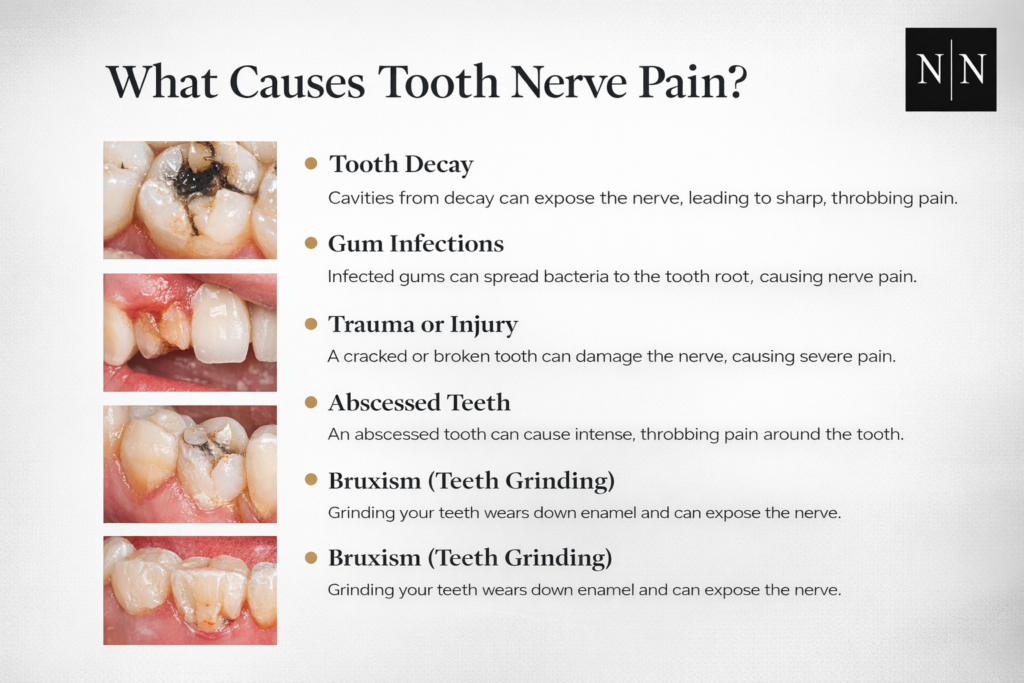
- Tooth Decay
The most common cause of nerve pain is tooth decay. As bacteria break down the enamel on your tooth, it creates cavities that can eventually reach the soft tissue (pulp) inside the tooth, where the nerve resides. This allows pain-causing bacteria to make contact with the nerve, leading to sensitivity or throbbing pain.
- Gum Infections
Sometimes, gum infections, like periodontitis, can contribute to nerve pain. When bacteria spread from the gums to the tooth root, it can inflame the nerve and lead to discomfort. This can also cause additional swelling around the affected tooth.
- Trauma or Injury
A sudden impact, like biting down on something hard or experiencing an injury to the mouth, can cause nerve damage. When a tooth is cracked, chipped, or fractured, it exposes the nerve, causing sharp pain.
- Abscessed Teeth
An abscess, or a pus-filled infection near the root of your tooth, is another reason for nerve pain. It can cause intense, continuous pain that may worsen when pressure is applied to the tooth. Abscesses are serious and can lead to further infection if not treated promptly.
- Bruxism (Teeth Grinding)
If you grind your teeth at night or throughout the day, this pressure can wear down your enamel and cause nerve exposure. Over time, this grinding may lead to pain, especially if there are cracks in the teeth.
Symptoms to Watch For:
- Sharp pain when chewing or biting
- Sensitivity to hot and cold temperatures
- Throbbing pain that may be intermittent or constant
- Swelling or redness around the tooth
It’s important to pinpoint the cause of your tooth nerve pain so you can address it effectively. Ignoring the pain may only make it worse.
Safe and Effective Home Remedies for Quick Relief
While it’s important to see a dentist in Burbank if the pain persists, there are several home remedies you can use to find immediate relief from tooth nerve pain. These remedies are safe and can help you manage the discomfort until you can get to a dental professional.
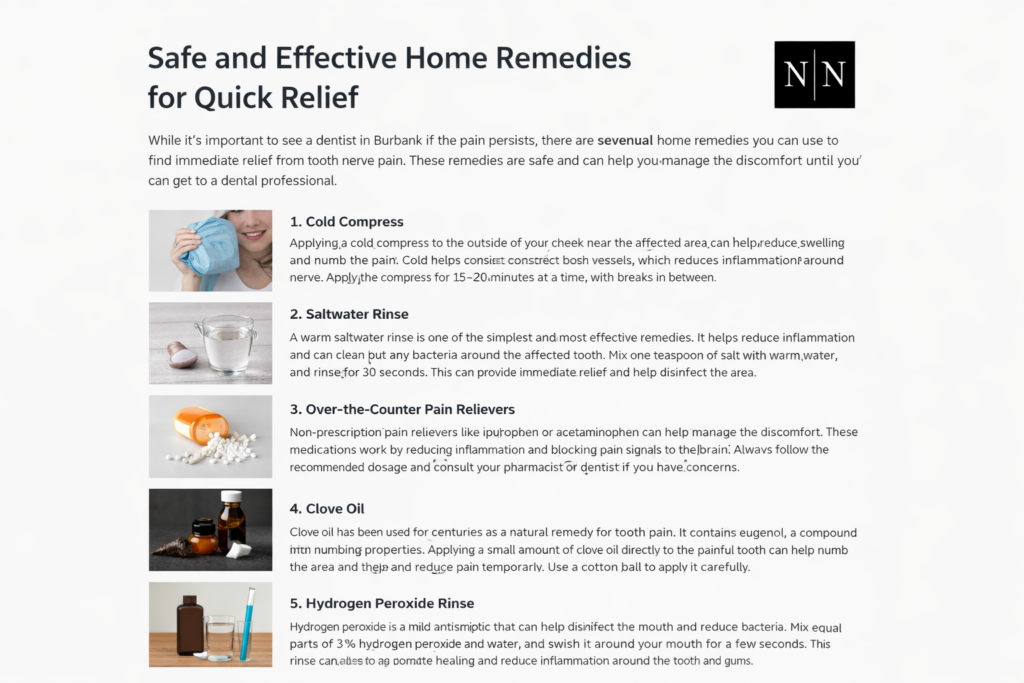
1. Cold Compress
Applying a cold compress to the outside of your cheek near the affected area can help reduce swelling and numb the pain. Cold helps constrict the blood vessels, which reduces inflammation around the nerve. Apply the compress for 15-20 minutes at a time, with breaks in between.
2. Saltwater Rinse
A warm saltwater rinse is one of the simplest and most effective remedies. It helps reduce inflammation and can clean out any bacteria around the affected tooth. Mix one teaspoon of salt with warm water, and rinse for 30 seconds. This can provide immediate relief and help disinfect the area.
3. Over-the-Counter Pain Relievers
Non-prescription pain relievers like ibuprofen or acetaminophen can help manage the discomfort. These medications work by reducing inflammation and blocking pain signals to the brain. Always follow the recommended dosage and consult your pharmacist or dentist if you have concerns.
4. Clove Oil
Clove oil has been used for centuries as a natural remedy for tooth pain. It contains eugenol, a compound with numbing properties. Applying a small amount of clove oil directly to the painful tooth can help numb the area and reduce pain temporarily. Use a cotton ball to apply it carefully.
5. Hydrogen Peroxide Rinse
Hydrogen peroxide is a mild antiseptic that can help disinfect the mouth and reduce bacteria. Mix equal parts of 3% hydrogen peroxide and water, and swish it around your mouth for a few seconds. This rinse can also promote healing and reduce inflammation around the tooth and gums.
While these remedies can provide temporary relief, they are not permanent solutions. You should still schedule an appointment with Nalbandian Dentistry to address the underlying cause of the pain.
When to Seek Professional Dental Help
While home remedies can offer some relief, there are certain situations when you need to see a dentist. Ignoring severe tooth nerve pain can lead to more serious issues like abscesses or permanent nerve damage. Here are some signs that you need professional help:
- Severe Pain
If the pain is unbearable and does not subside with over-the-counter medications or home remedies, it’s time to see a dentist. Severe, persistent pain is a sign that the problem is likely more serious than a simple cavity.
- Swelling or Fever
Swelling around the affected tooth or the presence of a fever can indicate an infection. This is especially true if there is pus coming from the area. Infections in the tooth or gums require professional treatment, such as antibiotics or drainage of an abscess.
- Pain that Lasts for Days
If the pain lasts for more than a few days despite using pain relievers or remedies, you should consult with a dentist. This could signal that the nerve is severely infected or damaged and requires more extensive treatment like a root canal.
What a Dentist Will Do
When you visit Nalbandian Dentistry, the dentist in Burbank will conduct an exam to determine the cause of the pain. Depending on the severity, treatment options may include:
- Root Canal Therapy: To treat an infected or damaged nerve.
- Fillings or Crowns: To repair cavities or cracks in the tooth.
- Antibiotics: To treat infections or abscesses.
Prolonged pain should not be ignored. Early intervention can prevent complications and ensure better long-term outcomes.
Additional Tips for Preventing Tooth Nerve Pain
Taking steps to prevent tooth nerve pain in the future is key to maintaining good oral health. Here are a few tips that can help:
- Proper Oral Hygiene
Brush your teeth twice a day with fluoride toothpaste and floss daily to remove plaque and prevent cavities. Regular brushing can help avoid tooth decay and gum disease, which are common causes of nerve pain.
- Diet and Habits
Limit sugary foods and drinks, as they can contribute to tooth decay. Drinking plenty of water throughout the day can help wash away food particles and bacteria, reducing the risk of cavities and infections.
- Regular Dental Visits
Schedule routine dental checkups with Nalbandian Dentistry to catch issues before they become severe. Regular visits to the dentist can help detect early signs of decay or infection, allowing for prompt treatment.
By following these preventive measures, you can reduce the likelihood of experiencing tooth nerve pain in the future and maintain a healthy, pain-free smile.
In summary, tooth nerve pain can be excruciating, but there are several ways to reduce the pain quickly and safely. Using cold compresses, saltwater rinses, and over-the-counter pain relievers can provide relief, but it’s important to seek professional dental care if the pain persists or worsens.
At Nalbandian Dentistry, we’re committed to providing high-quality care for your dental needs. If you’re experiencing tooth nerve pain or any other dental concerns, don’t wait. Schedule an appointment today, and let us help you find the relief you deserve.
Frequently Asked Questions
When should I see a dentist for nerve pain?
If the pain is severe, persistent, or accompanied by swelling or fever, it’s time to see a dentist for professional treatment.
Can saltwater help tooth nerve pain?
Yes, a warm saltwater rinse can reduce inflammation and help alleviate discomfort around the affected tooth.
How long does tooth nerve pain usually last?
Tooth nerve pain can last from a few hours to several days, depending on the underlying cause. Persistent pain requires professional care.
How do I know if my tooth nerve pain is serious?
If the pain worsens, lasts for more than a few days, or is accompanied by swelling or fever, seek professional dental care immediately.
Can I prevent tooth nerve pain?
Good oral hygiene, regular dental checkups, and avoiding sugary or acidic foods can help prevent tooth nerve pain.