


Accidents happen when you least expect them. Whether you’re enjoying a meal, playing sports, or simply talking, a tooth can get damaged unexpectedly. From minor chips to more severe breaks, a damaged tooth can leave you in discomfort and worry. However, knowing what to do in the moment can make all the difference. Immediate action can reduce pain, prevent further damage, and increase the chances of saving your tooth.
In this blog, we will walk you through the immediate steps you should take to manage a damaged tooth until professional dental care is available. Whether you’re at home, work, or out in the community, these tips can help minimize the impact of tooth damage and guide you toward quick, effective care.
Common Causes of Tooth Damage
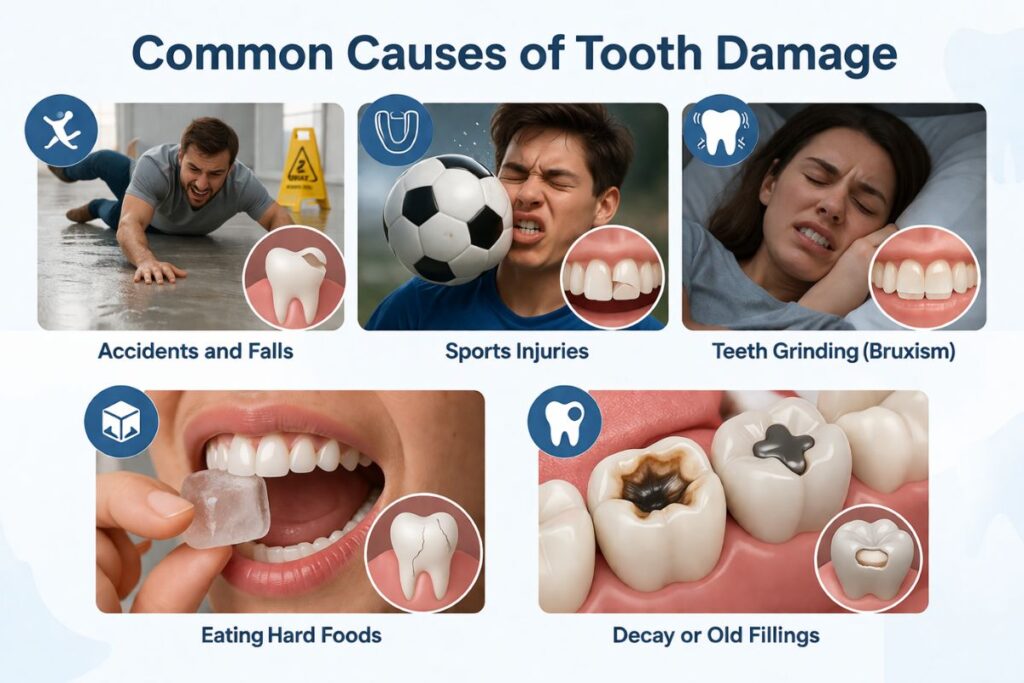
Tooth damage can occur in a variety of ways, often when you least expect it. The most common causes include:
- Accidents and Falls
A sudden trip, a slip on a wet surface, or a fall can easily result in a damaged tooth. These incidents often lead to chipped, cracked, or even knocked-out teeth. - Sports Injuries
Engaging in contact sports like basketball, soccer, or hockey can expose you to potential dental injuries. A direct blow to the face, whether from a ball or an opponent, can cause tooth fractures or displacement. Wearing a mouthguard can significantly reduce the risk of these injuries. - Teeth Grinding (Bruxism)
While less dramatic, the constant grinding of teeth, especially while sleeping, can lead to wear and tear, cracking, or chipping of teeth over time. If you suffer from bruxism, it’s important to seek a solution to prevent further damage. - Eating Hard Foods
Biting into something unexpectedly hard, like ice, candy, or nuts, can crack or chip a tooth. The force exerted on your teeth when chewing tough substances can lead to significant damage. - Decay or Old Fillings
Long-term untreated cavities can weaken a tooth, making it more prone to damage from simple activities like chewing. Old fillings may also fall out, leaving the tooth exposed and vulnerable.
Understanding the common causes of tooth damage is the first step in preventing accidents. However, even with precaution, damage can still occur. That’s why it’s essential to know what to do when it happens.
How to Recognize a Damaged Tooth
Knowing how to identify a damaged tooth is crucial for determining how urgent the situation is and what immediate actions you need to take. Here are the common types of tooth damage:
- Chips
A small chip in the tooth’s surface may not cause pain, but it can expose the sensitive inner layers of the tooth. The damage might be visible, but it’s usually less severe unless it affects the tooth’s function. - Cracks
Cracks can range from superficial to deep, potentially affecting the root of the tooth. A cracked tooth may not be immediately noticeable, but it can cause pain, especially when eating or drinking. If left untreated, cracks can lead to further structural damage. - Fractures
A fractured tooth is a more significant break than a chip or crack. The fracture may be visible and cause immediate pain, especially if the fracture goes down to the nerve. A fracture often requires professional dental care for restoration or repair. - Complete Breakage or Knocked-Out Teeth
When a tooth is knocked out or breaks completely, it’s critical to act quickly. A knocked-out tooth can sometimes be re-implanted if you seek immediate dental care. For a completely broken tooth, the dental team in Burbank may need to restore it with a crown or alternative restorative procedures.
Recognizing the type of damage early can help you determine how urgent your situation is and what steps to take next. In some cases, damage may not cause immediate pain, but if left untreated, it can worsen and cause further complications.
Immediate Steps to Take When a Tooth Gets Damaged
When a tooth is damaged, staying calm and taking the right steps can greatly increase the chances of saving the tooth and minimizing pain. Here’s what to do:
Step 1: Assess the Damage to Your Tooth
- Visual and Physical Checks:
Begin by examining the tooth to see if it’s chipped, cracked, or completely knocked out. Assess whether there’s bleeding and if you’re experiencing pain. In some cases, you may not feel much pain initially, but still, take steps to protect the tooth. - Signs of a Serious Issue:
Excessive pain, bleeding, or difficulty moving the jaw are signs that the injury may require emergency care. If the damage is severe, like a knocked-out tooth, seek immediate help from a dental professional. - What to Look for in a Broken Tooth:
If the tooth is cracked, check if it has sharp edges, as these can cut your gums or tongue. Also, look for any visible cracks or fractures that could compromise the integrity of the tooth.
Step 2: Control the Pain and Bleeding
- Use a Cold Compress:
Applying a cold compress to the outside of your mouth can reduce swelling and numb the pain. Hold the compress against your cheek for 15-20 minutes at a time to help alleviate discomfort. - Pain Relief:
Over-the-counter pain relievers such as ibuprofen or acetaminophen can help manage pain. Be sure to follow the recommended dosage to avoid any complications. - Managing Bleeding:
If there’s bleeding, use clean gauze or a cloth to apply gentle pressure to the area. This will help stop the bleeding and provide comfort while you prepare to see a dentist in Burbank.
Step 3: Preserve the Tooth Fragments (If Applicable)
- Chipped or Broken Tooth:
If the tooth has broken off, carefully collect any pieces. Store them in a clean container, such as a small cup of milk or saline solution. Keep the fragments moist to preserve them until you can visit the dentist. - Handling a Knocked-Out Tooth:
If the tooth has been knocked out, gently pick it up by the crown (the top part) and avoid touching the root. If possible, place the tooth back in its socket or keep it moist by putting it in milk or between your cheek and gum.
Step 4: Rinse Your Mouth and Protect the Tooth
- Rinsing:
Rinse your mouth with warm salt water to clean the area and reduce the risk of infection. Avoid using hot or cold water, as this could increase discomfort. - Dental Wax or Temporary Filling:
If the damaged tooth has sharp edges, you can use dental wax or a temporary filling material to cover it. This will prevent the sharp edges from cutting your tongue or the inside of your cheek.
Step 5: Visit Your Dentist as Soon as Possible
- Importance of Timely Care:
Seeking prompt dental care is essential for saving the tooth and ensuring it heals properly. The longer you wait, the more likely it is that the damage will worsen, requiring more extensive treatment. - What to Expect at the Dental Office:
At the dental office, your dentist will likely take X-rays to assess the damage. Depending on the severity, they may apply a filling, place a crown, or suggest root canal therapy to save the tooth.
The Long-Term Impact of Tooth Damage
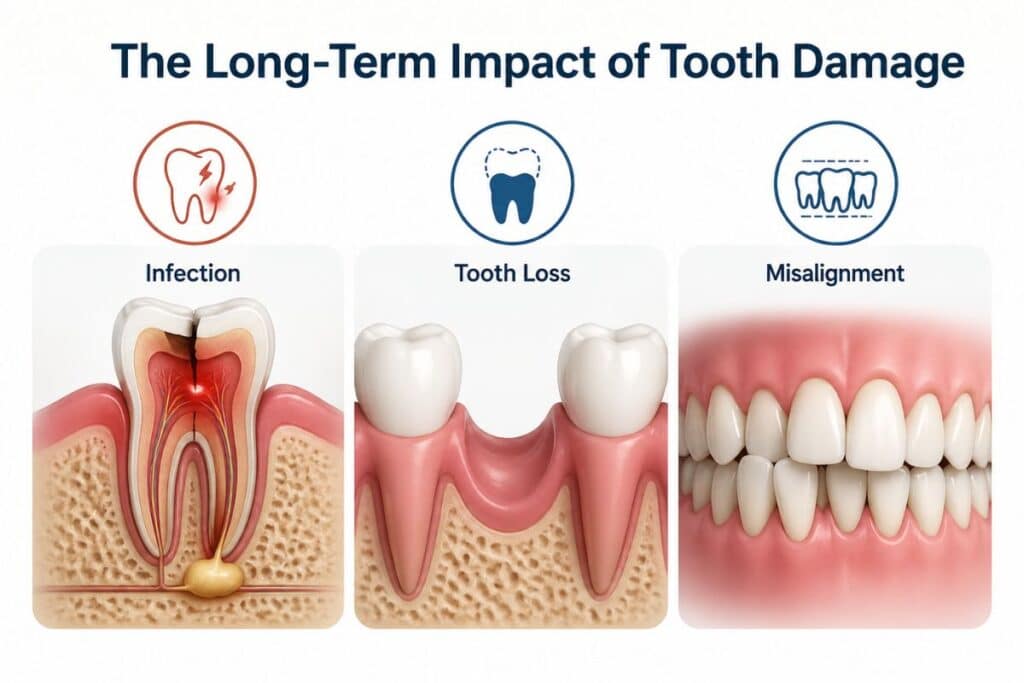
While quick action can save a damaged tooth, neglecting to get professional care can lead to serious long-term consequences. If not treated promptly, damaged teeth can result in:
- Infection:
Cracks and fractures can expose the inner tissues of the tooth, leading to infections that can spread to the root and surrounding gums. - Tooth Loss:
Severe damage to the tooth may lead to its eventual loss if not properly addressed. If a tooth is knocked out and not reimplanted promptly, it may be impossible to save. - Misalignment:
If the damaged tooth is not repaired, it may lead to misalignment of the surrounding teeth, which can cause problems with your bite and lead to further dental issues.
Regular dental visits, even for minor issues, can help prevent these long-term effects and ensure your teeth stay healthy.
Taking immediate steps when you damage a tooth can make all the difference in preserving its function and appearance. Remember to assess the damage, control pain, and visit a dentist promptly. The sooner you seek care, the better your chances of saving the tooth and avoiding more serious complications.
If you’ve undergone a dental injury, don’t wait. Contact Nalbandian Dentistry today to get the care you need. Our team is here to provide fast, professional dental care and help you get back to your normal routine.
What People Ask
1. How do I know if my tooth damage is severe?
If you’re experiencing intense pain, swelling, or if the tooth is broken completely, it’s best to seek emergency dental care.
2. Should I eat with a damaged tooth?
Avoid eating on the damaged side to prevent further injury. Stick to soft foods until you can see a dentist.
3. What is the best way to stop bleeding from a damaged tooth?
Use clean gauze to apply gentle pressure to the bleeding area, and bite down softly until the bleeding stops.
4. How long do I have to see a dentist for a damaged tooth?
The sooner, the better, ideally within 24 hours. Prompt care increases the chances of saving the tooth and minimizing complications.
5. How can I prevent future tooth damage?
Wearing a mouthguard during sports, avoiding hard foods, and practicing good oral hygiene can help prevent tooth damage.